

New Traffic Congestion Hotspots in Ho Chi Minh City (Updated January 2027)
Traffic conditions in Saigon continue to experience major changes in 2027. Multiple key infrastructure projects have entered accelerated construction and completion phases, leading to the emergence of new congestion points across the city’s road network. Here is the latest update on Ho Chi Minh City’s traffic bottlenecks so you can plan alternative routes accordingly.
Latest Traffic Congestion Hotspots in Ho Chi Minh City
Simultaneous construction of major projects has turned the following areas into new traffic nightmares:
1. Ton Duc Thang – Nguyen Huu Canh – Nguyen Binh Khiem Axis (Saigon Ward)
Following traffic flow adjustments around Ba Son Bridge and urban beautification works, the Ton Duc Thang – Nguyen Huu Canh – Nguyen Binh Khiem corridor (Saigon Ward, former District 1) has become a new bottleneck in the city center.
Barricades are currently in place along Ton Duc Thang Street for the construction of pedestrian overpasses connecting to Bach Dang Wharf Park. During peak hours, traffic pressure intensifies due to the direct conflict between vehicles descending from Ba Son Bridge, traffic flowing in from Binh Thanh, and local central-area traffic. The Nguyen Binh Khiem – Nguyen Huu Canh intersection frequently experiences severe overload.
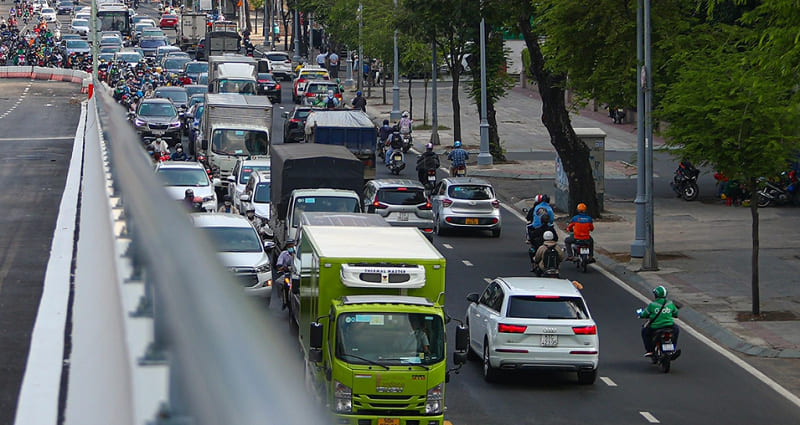
To permanently address this risk, with a completion target of 2027, the city is building two steel pedestrian overpasses on Ton Duc Thang Street (at the Nguyen Hue and Thai Van Lung intersections). These structures will separate pedestrian access to Bach Dang Wharf Park and help clear the intersections. Although current construction barriers are narrowing the roadway and causing temporary congestion, this is a necessary step toward restoring smooth traffic flow along the entire corridor in the near future.
2. Nguyen Tat Thanh Road (Xom Chieu Ward)
As the sole major route connecting the southern areas (former District 7 and Nha Be) to the city center, Nguyen Tat Thanh Road is routinely overloaded during peak hours. The narrow roadway combined with dense volumes of cars, trucks, and motorbikes keeps congestion risk constantly high.
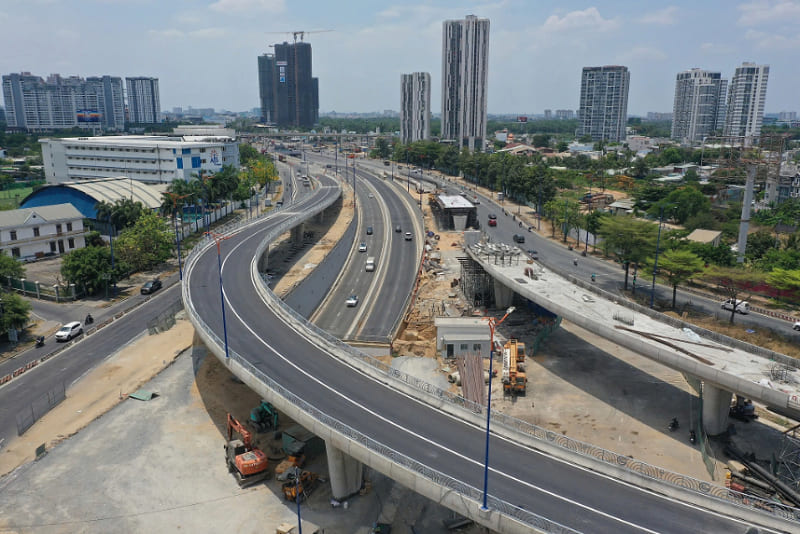
To resolve this situation once and for all, the city is accelerating plans to widen Nguyen Tat Thanh Road to 37–46 meters and relocate infrastructure from Khanh Hoi Port to restore free-flowing North–South connectivity.
3. An Phu “Super Intersection” (Binh Trung Ward)
Despite the opening of key components such as the N2 flyover branch, the HC1-02 underpass, and the N3 and N4 branches toward Cat Lai Port, the three-level An Phu “super intersection” (Binh Trung Ward) remains one of the most severe congestion hotspots at the eastern gateway of Ho Chi Minh City.
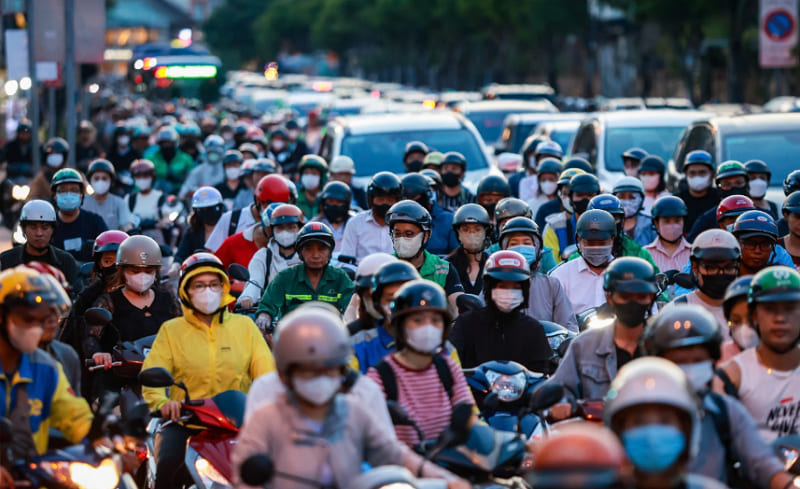
Traffic pressure here stays extremely high due to the complex interweaving of heavy trucks entering and leaving the port, vehicles coming off the Ho Chi Minh City – Long Thanh – Dau Giay Expressway, and heavy flows on the Mai Chi Tho – Luong Dinh Cua corridor. Construction barriers further reduce usable road space, causing prolonged jams during morning and evening peak hours.
Due to land clearance issues involving 2.2 hectares along Luong Dinh Cua Street, the full project completion has been delayed to Q3 2027. In the meantime, work is being accelerated on the Y-shaped flyover branch (N1.2), which is targeted for opening on 30 April 2027 and is expected to provide meaningful relief for the entire area.
Practical Tips and Alternative Routes to Avoid Congestion
To travel more smoothly and avoid the new congestion points, keep these tips in mind:
- Check traffic conditions before departure: Open the Ho Chi Minh City Traffic Information (TTGT) app or Google Maps 10–15 minutes before leaving to monitor real-time cameras and receive live congestion alerts.
- Avoid peak hours: Limit travel through major intersections between 7:00–8:30 a.m. and 5:00–6:30 p.m. If your schedule allows, leave 30 minutes earlier.
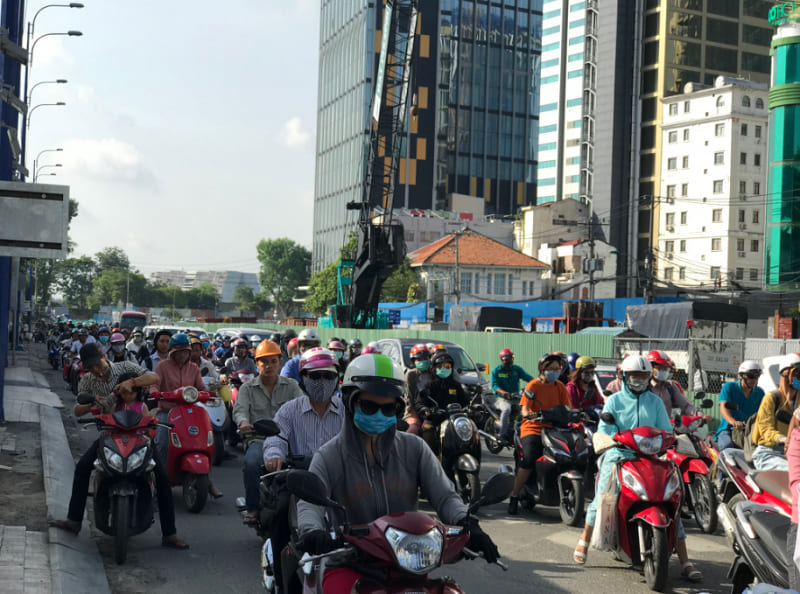
Alternative routes for the Binh Thanh ↔ City Center corridor
- From Binh Thanh to the center: Avoid going straight along Nguyen Huu Canh → Ton Duc Thang. Instead, turn right onto Nguyen Van Lac or Xo Viet Nghe Tinh → Hang Xanh Roundabout → continue via Dien Bien Phu or Phung Khac Khoan to reach the core central area.
- From the center to Binh Thanh: Avoid turning left from Ton Duc Thang onto Nguyen Huu Canh. A better alternative is Le Duan → Dinh Tien Hoang → Dien Bien Phu for smoother flow.
Escape route from District 7 to the City Center
Avoid crossing Tan Thuan Bridge onto Nguyen Tat Thanh. From District 7, take Nguyen Van Linh → turn right onto Nguyen Huu Tho → cross Kenh Te Bridge → continue straight on Khanh Hoi → turn right onto Hoang Dieu → cross Ong Lanh Bridge to reach Nguyen Thai Hoc Street directly. This route offers wider roads and fewer bottlenecks.
From Thu Duc to central Saigon
Instead of passing through the An Phu intersection, consider diverting via Vo Nguyen Giap (former Ha Noi Highway) or using the Ba Son Bridge route.
The appearance of these new congestion points is a short-term challenge during Ho Chi Minh City’s ongoing urban infrastructure upgrades. By proactively checking traffic updates, following new traffic diversion signs, and choosing appropriate travel times, residents can effectively avoid the worst bottlenecks and enjoy safer, smoother journeys.